Beginner strength training at home does not require a complete gym or a complicated six-day routine. You need a few movements that train the major muscle groups, a schedule you can repeat, and a simple way to make the work gradually harder.
The goal of your first weeks is not to leave every session exhausted. It is to learn the exercises, discover a sustainable effort level, and build enough consistency that progression becomes possible.
Why strength training belongs in a beginner plan
Strength work develops the muscles used for daily tasks, supports bone health, and improves physical capacity. Current US guidance recommends that adults perform muscle-strengthening activity involving the major muscle groups on at least two days each week, alongside aerobic activity. If you are currently inactive, remember that some activity is better than none and you can build gradually.
Home training removes travel and makes short sessions easier to fit around work or family. The tradeoff is that you must create your own structure—which is exactly what the plan below provides.
What equipment do you need?
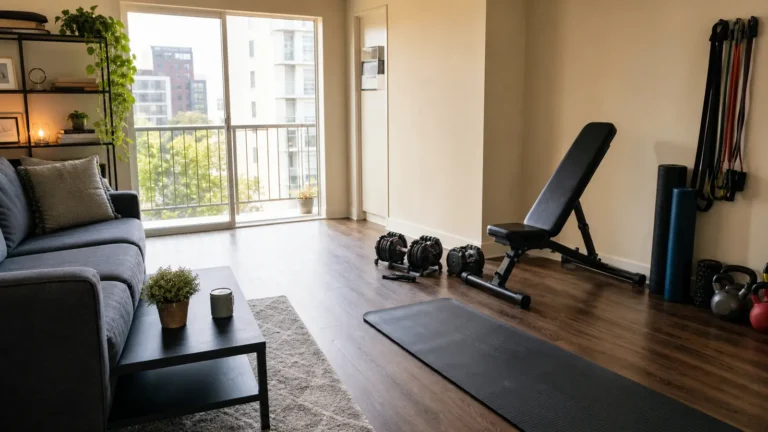
You can begin with a stable chair, floor space, and a backpack that can hold books or water bottles. One or two dumbbells and a resistance band add useful options but are not mandatory. Choose equipment you can control without rushing or changing your posture to complete a repetition.
Clear the area, wear footwear suitable for the surface, and keep a phone or notebook nearby to record what you did. If you have a health condition, recent injury, chest pain, dizziness, or other concerning symptoms, speak with an appropriate healthcare professional before starting.
A simple two-day full-body plan
Train on two nonconsecutive days, such as Monday and Thursday. Start with one or two sets of each exercise. Perform 8–12 controlled repetitions unless noted, stopping with approximately two or three good repetitions still possible.
Workout A
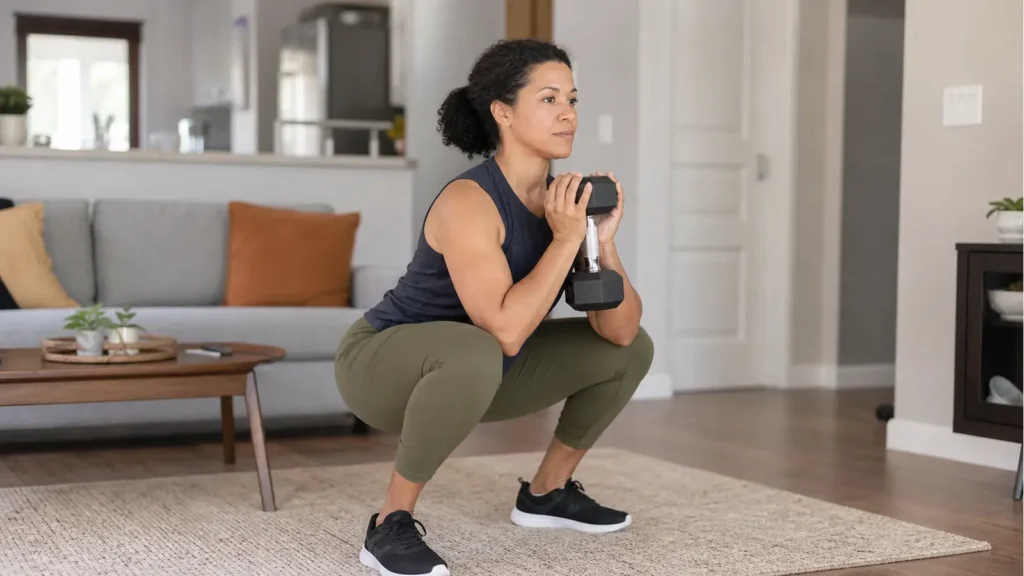
- Chair squat or goblet squat: sit back toward the chair and stand through the whole foot.
- Incline push-up: place your hands on a wall, counter, or stable bench. Use a lower surface as you improve.
- One-arm row: use a dumbbell, band, or loaded backpack and pull the elbow toward your hip.
- Glute bridge: press through the feet and raise the hips without overextending the lower back.
- Dead bug: perform 6–10 slow repetitions per side while keeping the trunk controlled.
Workout B
- Supported split squat: hold a stable surface and work within a comfortable range.
- Dumbbell overhead press or band press: use a load you can control without leaning back.
- Hip hinge or Romanian deadlift: move the hips backward while keeping the load close.
- Band pulldown or another row variation: pull with control and avoid shrugging.
- Suitcase carry: walk for 20–40 seconds holding weight on one side, then switch.
How hard should the sets feel?
Beginners do not need to train to complete muscular failure. Use a weight or variation that feels challenging near the end while your technique remains stable. If you could easily perform six more repetitions, the exercise is probably too light. If the target range forces you to rush, shorten the movement, or lose control, make it easier.
Rest about 60–120 seconds between sets. Longer rest is acceptable when a compound exercise raises your breathing or when it helps you perform the next set well.
How to progress each week
Keep the exercise and load consistent long enough to judge improvement. First add repetitions within the chosen range. When you can perform the top of the range for all sets with good control, add a small amount of weight, use a slightly harder variation, or add a set. Change one variable at a time.
A simple log might read: goblet squat, 2 sets of 10 with 20 pounds, about three repetitions in reserve. That note gives you a useful target next week. Constantly replacing exercises makes progress harder to measure.
Warm-up, soreness, and recovery
Begin with five minutes of easy movement and one lighter practice set of the first exercises. You do not need a long ritual. Mild muscle soreness can occur when starting, but severe pain is not the objective and soreness is not proof of an effective session.
Leave at least a day between these workouts, sleep as consistently as possible, and eat regular meals that support your needs. Walking or other moderate aerobic activity can be added on separate days or after short strength sessions. The CDC recommends at least 150 minutes of moderate aerobic activity per week for general adult health, but beginners can build toward that amount.
Common beginner mistakes
- Starting with too many days and abandoning the plan after two weeks.
- Changing every workout instead of practicing key movements.
- Choosing load based on ego rather than control.
- Ignoring available equipment and copying a gym plan at home.
- Treating nutrition, sleep, and recovery as separate from progress.
If you are returning after a long layoff, our guide on how to start training again will help you set an appropriate pace.
Turn a starter routine into your plan
This template is a safe framework for many healthy beginners, but the best exercise, volume, and progression depend on your goal, schedule, limitations, and equipment. Kairon Training builds that structure for you and adjusts it as you improve.
Contact Kairon Training or explore our US-wide online coaching plans. We can help you move from “I should start” to a routine you know how to follow.
This information is educational and is not medical advice. Stop and seek professional care for concerning pain or symptoms.